Antimicrobial Resistance Knowledge and Practices among Secondary School Students in Akure South Local Government Area, Ondo State, Nigeria: A Cross-Sectional Study
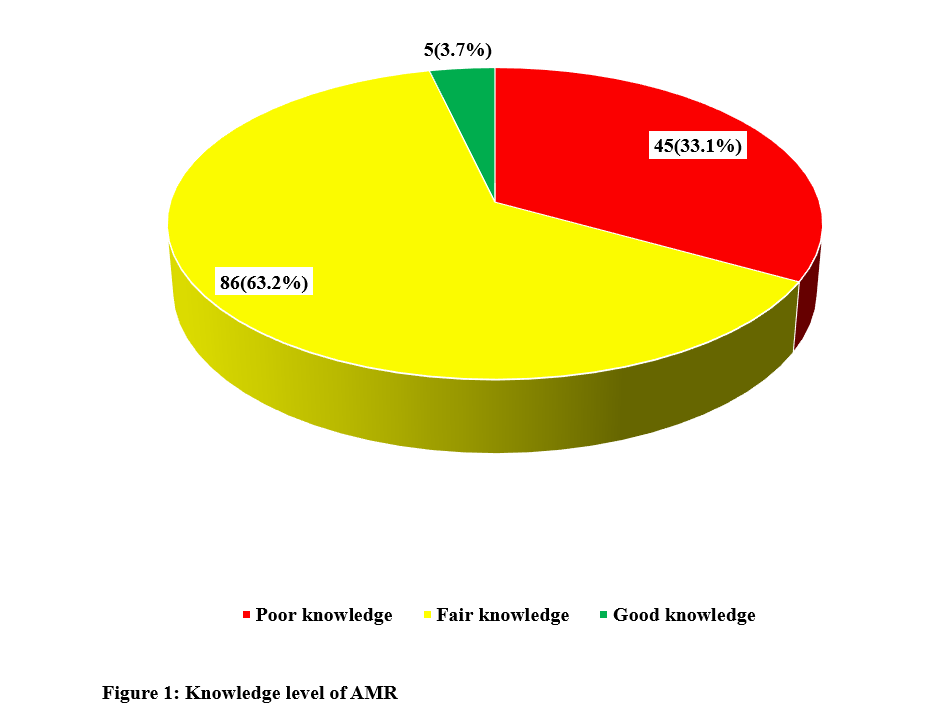
Analysed survey data from a cross-sectional study of knowledge and practices on antimicrobial resistance (AMR) among 396 secondary school students in 10 schools in Akure South LGA, Ondo State, Nigeria. Data were cleaned in Excel and analysed in SPSS 23. The analysis used descriptive statistics, multiple-response analysis and composite scoring to classify students’ knowledge and antibiotic-use practices. Only 34.3% of students had heard of AMR, and most of those who had showed only fair knowledge (63.2%). More than half (53.5%) had poor antibiotic-use practices: 57.6% stopped their antibiotics once they felt better, and 69.4% believed antibiotics are needed for every fever or cold. The findings support school-based AMR education and stronger control of access to antibiotics.
Challenge
Misuse of antibiotics is a major driver of AMR, which was directly responsible for an estimated 1.27 million deaths worldwide in 2019. Western sub-Saharan Africa carries the highest burden. Adolescents are forming health habits that will last into adulthood, yet there was little evidence on what Nigerian secondary school students know about AMR or how they use antibiotics. The analysis had to turn raw questionnaire responses into clear, comparable measures of knowledge and practice. This included handling questions that allowed more than one answer, and knowledge questions asked only of students who had heard of AMR.
Objectives
Find out how aware secondary school students are of antimicrobial resistance
Measure and classify students’ level of knowledge about AMR
Assess students’ antibiotic-use practices and classify them as good or poor
Describe factors that may shape knowledge and practice, such as access to antibiotics without a prescription, AMR education in school and common misconceptions
Identify gaps to guide school-based interventions and policy on antibiotic access
Methods
Data quality checks: manually checked completed questionnaires for missing and inconsistent responses before entering the data
Data entry and cleaning: entered, coded and cleaned the data in Microsoft Excel, then moved it to SPSS 23 for statistical analysis
Reliability testing: used Cronbach’s alpha on pre-test data to check internal consistency (α = 0.7)
Descriptive statistics: frequencies and percentages for categorical variables, and means for numerical variables
Multiple-response analysis: for questions where students could choose more than one answer (perceived causes of AMR, sources of AMR information), so percentages do not add up to 100%
Subgroup analysis: knowledge items analysed only for students who had heard of AMR (n = 136)
Knowledge scoring: 6-point knowledge score classified with a modified Bloom’s cut-off: good (≥80%, 5–6 points), fair (50–79%, 3–4 points) and poor (<50%, 0–2 points)
Practice scoring: 14-point antibiotic-use score split into poor practice (0–7) and good practice (8–14)
Presentation: results summarised in frequency tables and charts of knowledge level and practice category
Data Sources
Primary data from a structured, pre-tested questionnaire answered by 396 secondary school students in 10 schools across 5 wards of Akure South LGA, Ondo State, Nigeria (96.6% of the 410 targeted). The questionnaire had four sections: sociodemographic characteristics, knowledge of AMR, antibiotic-use practices, and factors influencing knowledge and practice. It was pre-tested on 41 students in Akure North LGA. Ethical approval: Ondo State Ministry of Health (NHREC/Ondo SMH-HREC/02/01/2025).
Key Findings
Confidential (Result not made public yet)
Impact
Confidential (Result not made public yet)